
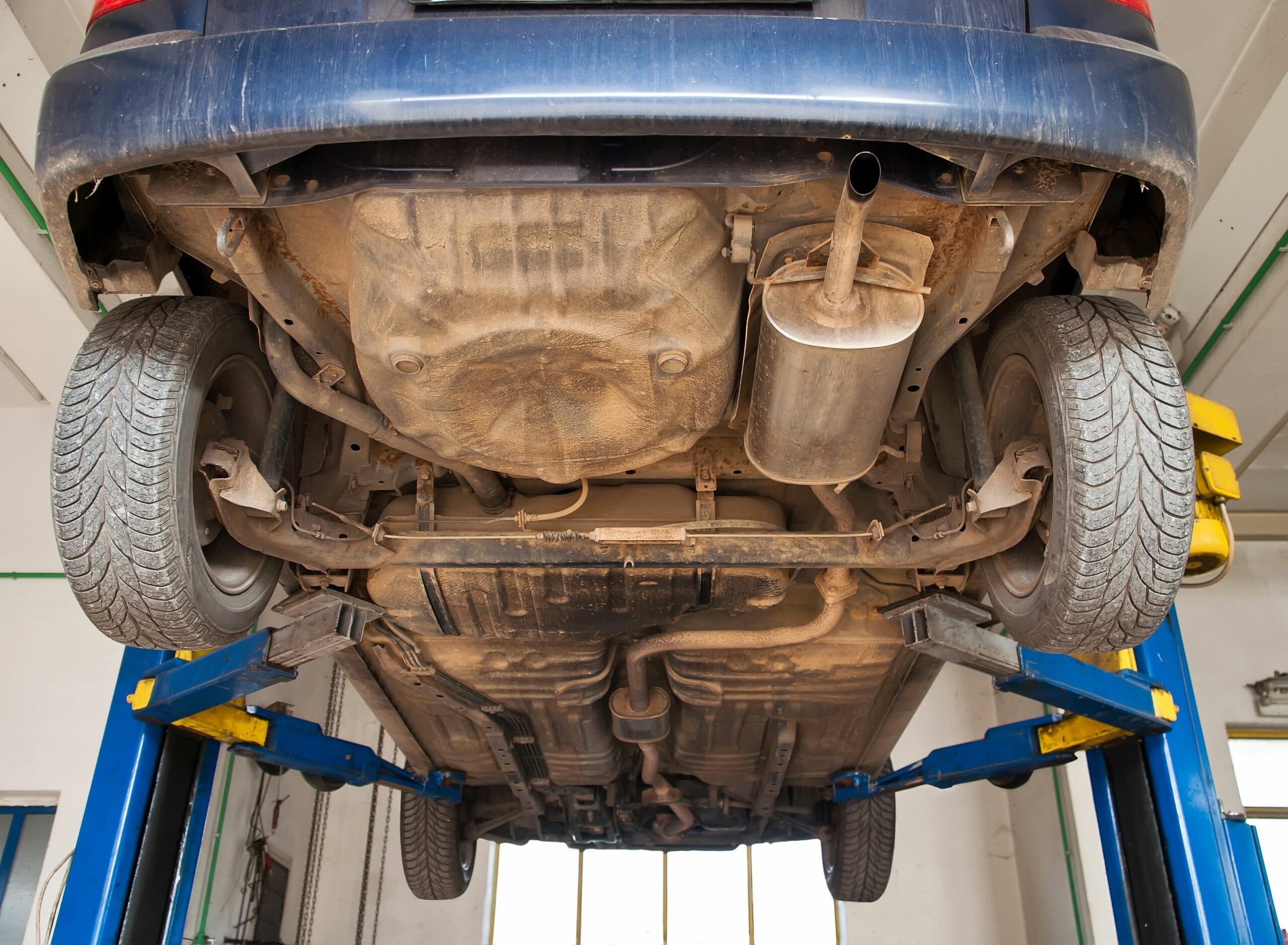
Your car spends its whole life with you in the seat and the bonnet facing up. The underside is the part you never see, and for most drivers, it is also the part they know least about. When a mechanic puts a car on a ramp, what are they actually looking at?
At Motorsector we film underneath every vehicle we work on so you can see exactly what we see. Here is what that footage shows.
The exhaust system
The exhaust runs the full length of the vehicle from the engine to the rear. A mechanic checks for corrosion, holes, loose sections and failed joints. A blowing exhaust is not just noisy, it allows harmful gases to escape in places they should not, and it will fail an MOT. Heat shields, the metal covers that sit around sections of the exhaust, are also checked. A loose heat shield is a common source of rattling noises that drivers often struggle to locate.
The brakes
From underneath, a mechanic can see the brake discs and calipers clearly. They check disc thickness, scoring on the surface and the condition of the caliper. Brake pipes and hoses are also inspected for corrosion, cracking and any signs of leaking fluid. Brake fluid leaks are a serious safety issue and are not always visible from the wheel arch.
The suspension
The suspension system connects your wheels to the body of the car and controls how it handles. A mechanic checks the condition of the shock absorbers, springs, wishbones, ball joints and anti-roll bar drop links. Worn bushes, the small rubber components that cushion the joints, are very common and often the cause of knocking or clunking noises over bumps. These are only clearly visible from underneath.
The steering
The steering rack, track rod ends and joints are checked for wear and play. Any looseness in the steering system affects how precisely the car responds and can make the vehicle less safe, particularly at speed or in an emergency. These components are also checked during an MOT, and wear that is not caught in time often results in a failure.
Fluid leaks
Oil, coolant, brake fluid, power steering fluid and gearbox oil can all leak from pipework and seals underneath the vehicle. Some leaks are minor and slow, others are more urgent. A mechanic checks for fresh staining, wet spots and the source of any drips. Many leaks are invisible from above until they become serious.
Corrosion
On older vehicles particularly, the underside can show significant rust to the subframe, floor panels and structural components. Some surface corrosion is normal. Corrosion that has penetrated structural metal is more serious and can affect both safety and MOT compliance. South London roads are not as heavily salted in winter as roads further north, but older vehicles that have travelled widely or sat unused still show significant underside rust.
Tyres and wheel condition
From a ramp, the inside edge of the tyre is visible. This is the part you cannot see from a normal inspection at ground level, and it wears differently from the outer edge. Uneven wear on the inner edge often points to a wheel alignment issue. The condition of the wheel itself and the wheel arch is also noted.
Why we film it
A verbal description of what we found under your car is one thing. Showing you the footage is another. At Motorsector, we send you the video so you can see the exact issue we are describing, ask us questions and make an informed decision before any work begins. That is what transparent servicing looks like.
Book online at motorsector.com or call us on 020 3981 1781.